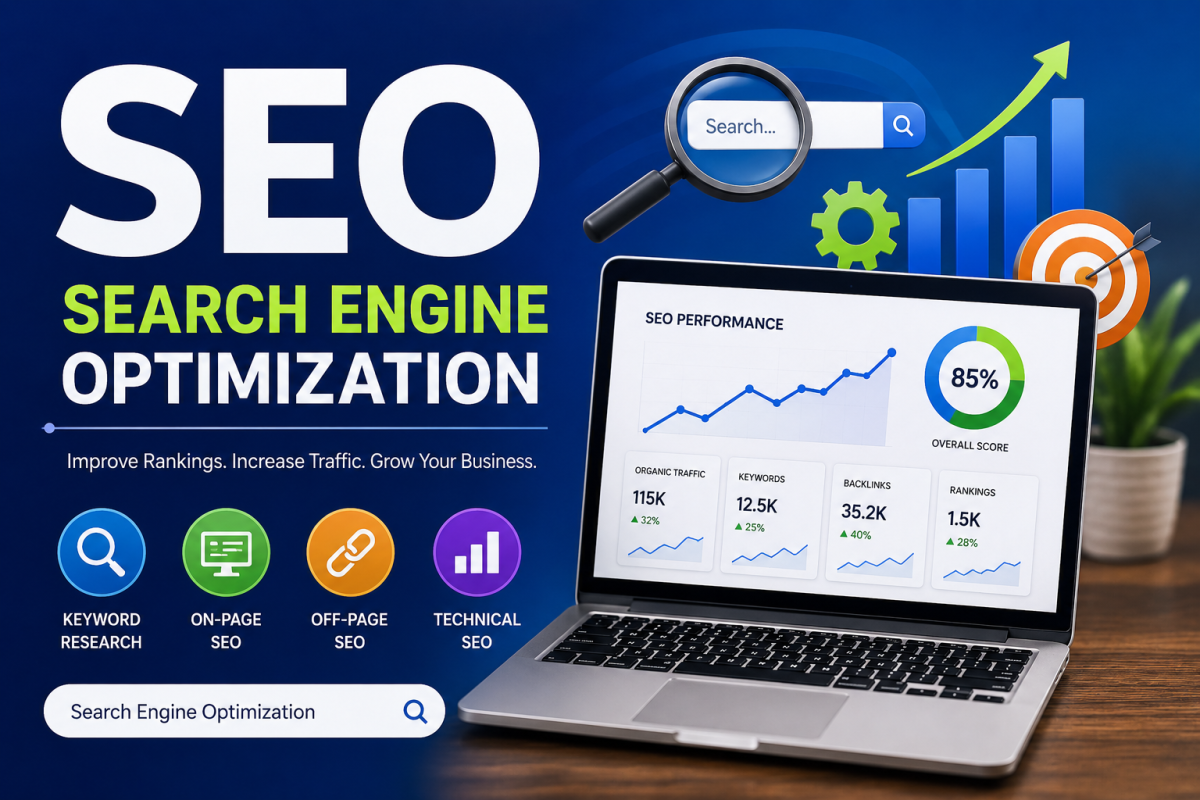
SEO: The Complete Guide to Search Engine Optimization
In today’s digital world, SEO is one of the most important strategies for growing online visibility. Whether you run a business website, blog, eCommerce store, or personal brand, SEO helps your content appear in search engine results when users search for relevant topics. Without proper SEO, even the best content can struggle to reach its audience.
Search engine optimization is not just about ranking higher on search engines. It is about creating better content, improving user experience, and building authority in your industry. This guide will explain everything you need to know about SEO and how you can use it to increase organic traffic.
What is SEO?
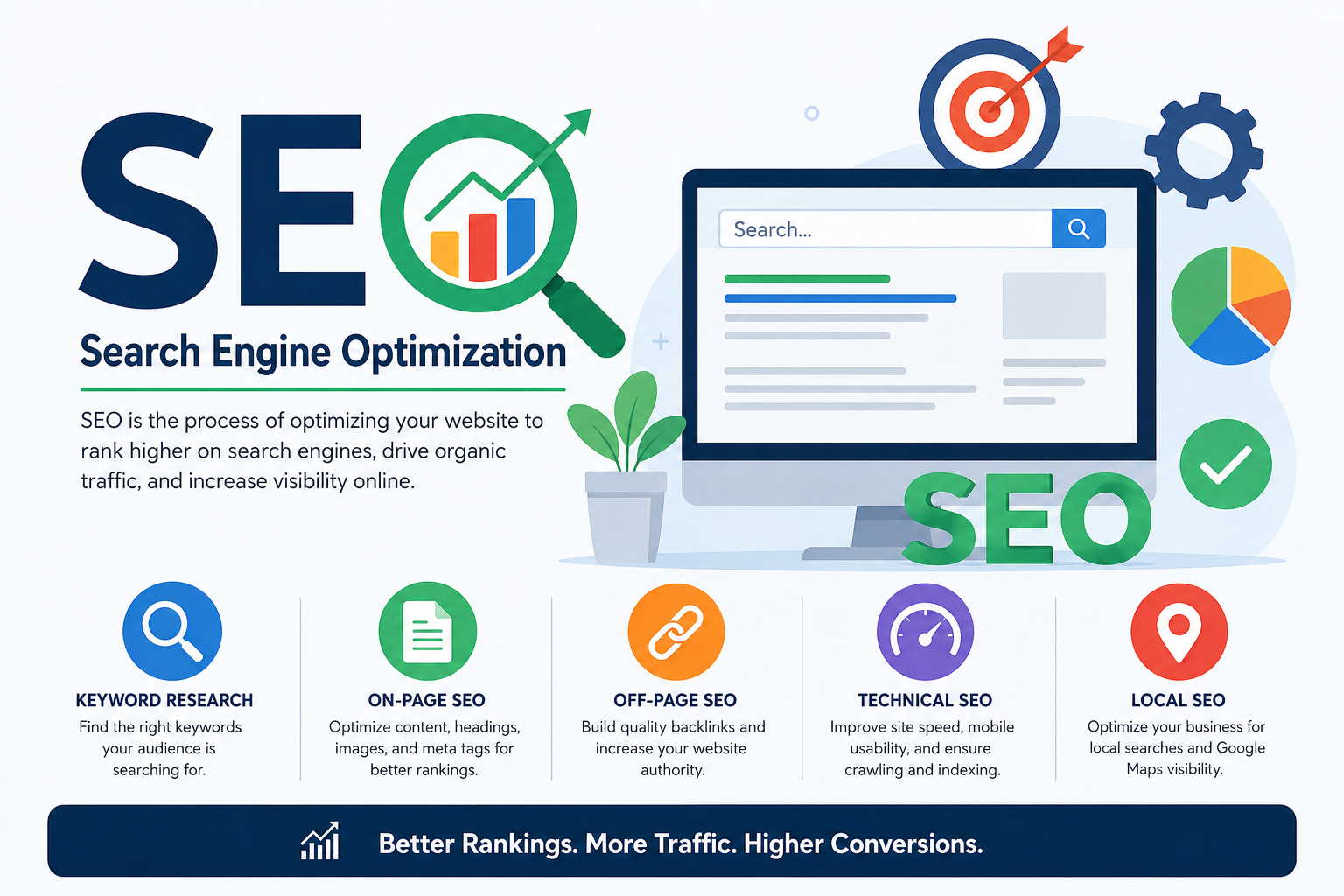
SEO stands for Search Engine Optimization. It is the process of optimizing your website so that search engines like Google can understand your content and rank it higher in search results.
The main goal of SEO is to increase organic traffic, improve visibility, and attract the right audience without paying for advertisements.
Search engines use algorithms to evaluate websites based on hundreds of ranking factors. Good SEO practices help your website meet those standards.
Why SEO Matters
Businesses and website owners invest in SEO because it delivers long-term results. Unlike paid ads, organic traffic can continue coming for months or years.
Here are some benefits of SEO:
- Increases website traffic
- Builds trust and credibility
- Improves brand awareness
- Generates quality leads
- Provides long-term results
- Reduces advertising costs
A strong SEO strategy can help small businesses compete with larger competitors online.
How Search Engines Work
To understand SEO, you need to know how search engines work.
Search engines perform three main actions:
1. Crawling
Search engines use bots to discover pages on the internet.
2. Indexing
After crawling, search engines store your pages in their database.
3. Ranking
When users search for something, search engines rank pages based on relevance and quality.
Good SEO ensures your website performs well in all three stages.
Types of SEO
There are several important types of SEO:
1. On-Page SEO
On-page SEO focuses on optimizing individual pages.
Important factors include:
- Title tags
- Meta descriptions
- Headings
- Keyword placement
- Internal links
- Image optimization
- URL structure
When creating content, use your target keyword naturally throughout the page.
2. Off-Page SEO
Off-page SEO refers to actions taken outside your website to improve rankings.
Examples include:
- Backlink building
- Brand mentions
- Social sharing
- Guest posting
High-quality backlinks are one of the strongest ranking signals in SEO.
3. Technical SEO
Technical SEO focuses on website performance and structure.
Key areas include:
- Website speed
- Mobile friendliness
- Secure HTTPS connection
- XML sitemap
- Structured data
- Crawlability
Technical improvements make it easier for search engines to access your content.
4. Local SEO
Local SEO helps businesses appear in location-based searches.
Examples:
- Restaurants
- Clinics
- Agencies
- Retail stores
Optimizing your Google Business Profile is essential for local SEO success.
Keyword Research in SEO
Keyword research is the foundation of SEO.
It helps you understand what users are searching for.
A good keyword should have:
- Search volume
- Low to medium competition
- User intent
- Relevance to your business
Examples of related keywords:
- SEO tips
- SEO tools
- SEO strategy
- SEO for beginners
- Technical SEO
Using related keywords improves topical relevance.
Content Optimization for SEO
Content is a major part of SEO success.
To create optimized content:
Write for Users First
Your content should solve real problems.
Use Proper Heading Structure
Use H1, H2, and H3 headings naturally.
Add Internal Links
Link to related content on your website.
Optimize Images
Compress images and use descriptive alt text.
Improve Readability
Use short paragraphs, bullet points, and simple language.
High-quality content improves user engagement and supports better SEO rankings.
Important Ranking Factors in SEO
Google considers many factors when ranking websites.
Some important SEO ranking factors include:
Content Quality
Original and useful content performs better.
Page Experience
Fast loading speed and mobile usability matter.
Backlinks
Links from trusted websites increase authority.
User Intent
Your content must match what users want.
Domain Authority
Established websites often rank easier.
Consistently improving these areas strengthens your SEO performance.
Common SEO Mistakes to Avoid
Many websites struggle because of avoidable SEO mistakes.
Avoid these:
- Keyword stuffing
- Duplicate content
- Broken links
- Slow website speed
- Ignoring mobile optimization
- Poor meta tags
- Low-quality backlinks
Fixing these issues can improve your rankings significantly.
Best SEO Tools
Using the right tools can improve your SEO strategy.
Popular tools include:
- Google Search Console
- Google Analytics
- Ahrefs
- SEMrush
- Moz
- Screaming Frog
These tools help with keyword research, audits, backlinks, and performance tracking.
Future of SEO
SEO continues to evolve with technology.
Important future trends include:
AI Search
Artificial intelligence is changing search behavior.
Voice Search
More users search using voice assistants.
User Experience
Search engines increasingly prioritize user satisfaction.
Helpful Content
Google rewards content created for people, not algorithms.
Adapting to these changes is essential for long-term SEO success.
Final Thoughts
SEO is one of the most powerful digital marketing strategies available today. With the right approach, SEO can increase traffic, improve visibility, and help your business grow online.
Success in SEO takes time, consistency, and quality content. By focusing on user experience, keyword research, technical improvements, and authority building, you can achieve sustainable rankings in search engines.
If you want long-term online growth, investing in SEO is one of the smartest decisions you can make.